


Yellow jacket bees can turn a normal Colorado backyard into a stressful place fast. One minute you are eating outside, mowing the lawn, or taking out the trash. The next, you notice black and yellow insects moving quickly around food, drink cans, grass, landscaping, or even a small hole in the ground.
Here is the important part first: yellow jacket bees are not actually bees. They are wasps. The phrase “yellow jacket bees” is common because people use it when searching online, but the insect itself is a yellow jacket, and its behavior is very different from a honey bee.
This updated guide explains how to identify yellow jacket bees, why they become more noticeable in Colorado during warm seasons, where they build nests, how to reduce sting risk, and when a nest becomes something you should not try to handle yourself.
What Are Yellow Jacket Bees?
Yellow jacket bees are social wasps. They live in colonies, defend a nest, feed their young, and become more noticeable as the colony grows. In Colorado, they are especially common around yards, parks, trash areas, patios, gardens, and outdoor eating spaces.
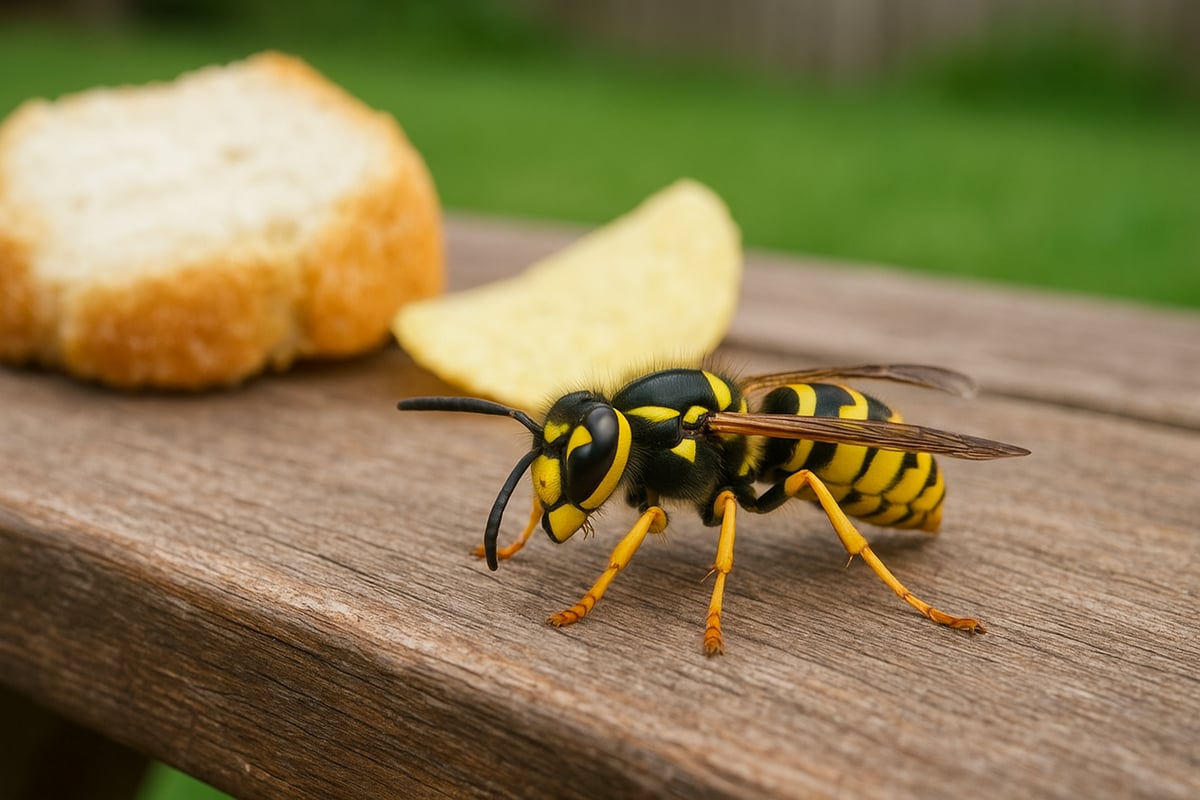
The confusion with bees is understandable. They are small, fast, black and yellow, and they show up around flowers and food. But yellow jackets are smoother, shinier, and usually more aggressive around a nest. Honey bees are generally fuzzier and more focused on pollen and nectar.
Yellow Jacket Bees Vs. Honey Bees
Knowing the difference matters. A honey bee near a flower is usually not the same risk as yellow jacket bees flying in and out of a ground nest. Misidentifying them can lead to the wrong response, and sometimes, more stings.
| Feature | Yellow Jacket Bees | Honey Bees |
|---|---|---|
| Body | Smooth, shiny, narrow waist | Fuzzy, thicker body |
| Color | Bold yellow and black markings | Golden brown with softer striping |
| Flight | Fast, direct, darting movement | Slower, steadier movement near flowers |
| Food Interest | Protein, sweets, trash, drinks, meats | Nectar and pollen |
| Sting Behavior | Can sting multiple times | Honey bees usually sting once |
| Common Nest Sites | Ground holes, wall voids, trees, eaves | Wax combs in hives or cavities |
Colorado State University notes that yellow jackets, paper wasps, and hornets make paper-like nests and are beneficial predators, but they can become serious nuisance pests when they nest near people. That balance is important. Yellow jacket bees are not “bad” insects, but they can become a real safety issue when their nest is close to daily activity.
Why Yellow Jacket Bees Matter In Colorado
Yellow jacket bees in Colorado tend to become more noticeable from late spring through fall, with the most frustrating activity often showing up in late summer. This is when colonies are larger, food sources shift, and workers become more interested in human food, trash, pet food, fruit, soda, and outdoor meals.
Along the Front Range, weather can make this feel inconsistent. A warmer spring may allow queens to start earlier. A wet period can support more insect prey. A hot, dry stretch can push yellow jacket bees closer to shaded patios, irrigated lawns, water sources, and trash areas. Denver’s 2025 annual weather summary from the National Weather Service reported above-normal temperatures for the year and above-normal precipitation at DIA, although much of the metro area was drier than average. That kind of uneven pattern is exactly why pest pressure can feel different from neighborhood to neighborhood.
That does not mean every season will be extreme. It means yellow jacket activity depends heavily on local conditions, nest survival, food availability, moisture, and where queens successfully establish nests.
The Life Cycle Of Yellow Jacket Bees
Yellow jacket colonies follow a yearly cycle. They do not usually keep using the same nest year after year. Instead, new queens survive winter in protected spaces and begin new nests once temperatures warm.
Spring: Queen Activity Begins
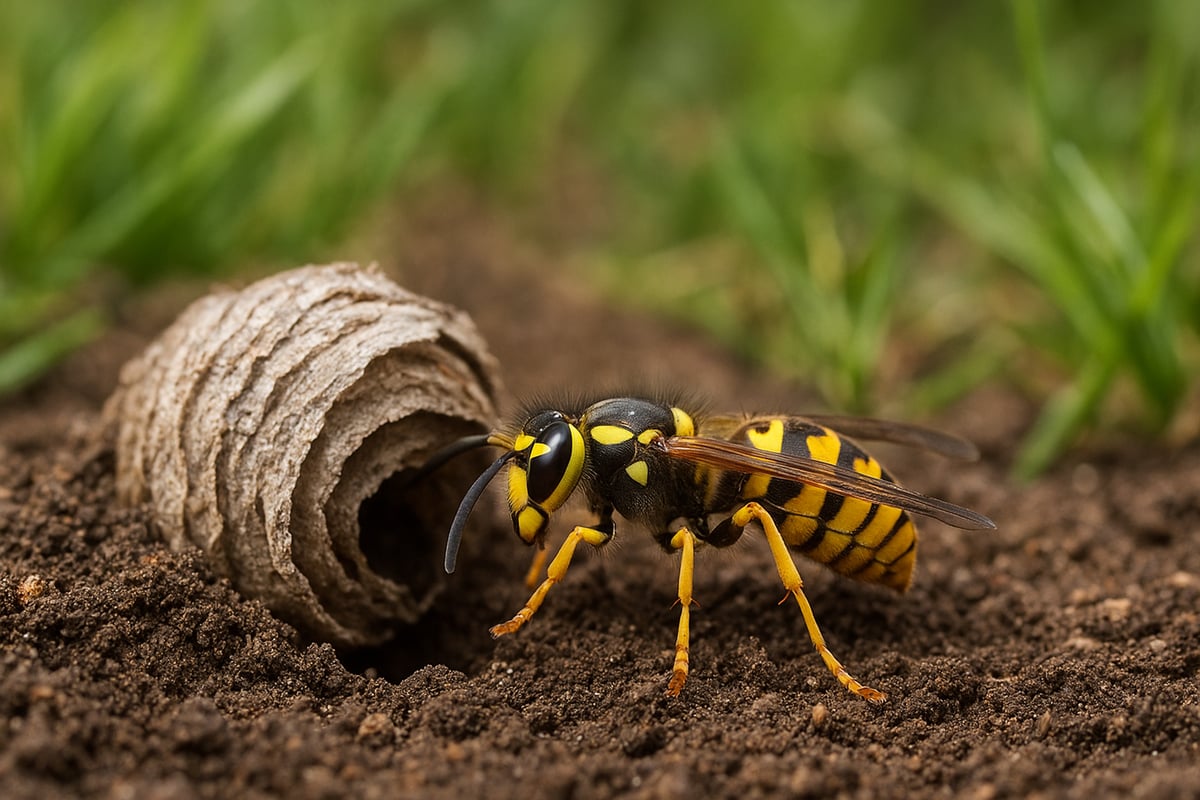
In spring, an overwintered queen starts looking for a place to build. She may choose an old rodent burrow, a soil cavity, a wall void, a hollow area under landscaping, or another protected spot. At first, the nest is small and easy to miss.
This is one reason early yellow jacket bees activity should not always be ignored. A few insects coming and going from the same hole or crack may be the beginning of a larger issue.
Summer: The Colony Expands
Once the first workers mature, they take over foraging and nest expansion. The queen stays inside and continues laying eggs. This is when the colony starts growing quickly.
By mid to late summer, yellow jacket bees may be much more visible around patios, barbecues, trash cans, gardens, fruit trees, pet food bowls, and playgrounds. They need protein for larvae and sugar for energy, so outdoor meals become a perfect target.
Fall: Aggression Becomes More Noticeable
Late summer and early fall are usually when yellow jacket bees feel the most aggressive. Food sources become harder to find, colonies are larger, and workers are more likely to investigate human food and drinks.
This is also when accidental encounters happen. Someone mows over a ground nest. A dog sniffs the wrong patch of grass. A child runs near a hidden entrance. A homeowner trims shrubs without realizing a nest is nearby.
| Season | What Yellow Jacket Bees Are Doing | What Homeowners Notice |
|---|---|---|
| Spring | Queens start new nests | Small activity around cracks, soil, or structures |
| Early Summer | Workers expand the colony | More wasps around landscaping and food |
| Late Summer | Colonies reach larger numbers | More aggressive activity near food and nests |
| Fall | Food sources shift and colonies decline | More encounters around trash, soda, fruit, and patios |
How To Identify Yellow Jacket Bees
Identification starts with body shape, movement, and behavior. Yellow jacket bees are usually compact, smooth, and sharply marked. Their bodies are less hairy than bees, and their waist is more defined.
Physical Signs
Most yellow jacket bees are about one-half inch to three-quarters of an inch long. They have black and yellow markings, short legs that do not hang noticeably during flight, and a shiny body surface.
Paper wasps can look similar, but they usually have longer legs that hang below them when flying. European paper wasps are common in Colorado and are often mistaken for yellow jackets. CSU Extension notes that paper wasps are generally more slender, while yellow jackets have a blunter, more compact body form.
Behavioral Signs
Behavior often gives them away. Yellow jacket bees move quickly and directly. They are commonly seen inspecting food, meat, sugary drinks, open trash, compost, pet food, and fallen fruit.
A single yellow jacket around food is annoying. Several yellow jacket bees repeatedly flying in and out of one location is different. That usually means there is a nest entrance nearby.
Where Yellow Jacket Bees Build Nests
Yellow jacket bees can nest in several places, and some are much easier to miss than others. Ground nests are especially common and risky because they may look like a simple hole in the soil.
Common Nest Locations
- Ground holes: Old rodent burrows, lawn edges, garden beds, and soil cavities.
- Wall voids: Cracks, gaps, siding openings, attic edges, and exterior wall spaces.
- Eaves and rooflines: Protected overhead areas near structures.
- Shrubs and trees: Hidden areas where activity may not be obvious at first.
- Compost and landscape areas: Places with cover, moisture, and nearby food sources.
Yellow jacket nests are made from chewed wood fiber mixed with saliva, creating a gray, papery material. Some nests are aerial and visible, but many are hidden underground or inside structures.
| Nest Type | Common Area | Why It Is Risky |
|---|---|---|
| Underground Nest | Lawns, gardens, edges of landscaping | Easy to step on or mow over |
| Wall Void Nest | Siding gaps, cracks, attic edges | Hard to see and difficult to access |
| Aerial Nest | Tree branches, eaves, shrubs | More visible, but still defensive when disturbed |
Safety Tips For Yellow Jacket Bees
Most people do not get stung because they simply see yellow jacket bees. They get stung because they accidentally disturb a nest, swat at them, trap them against skin, or drink from a can without realizing one has crawled inside.
How To Reduce Encounters
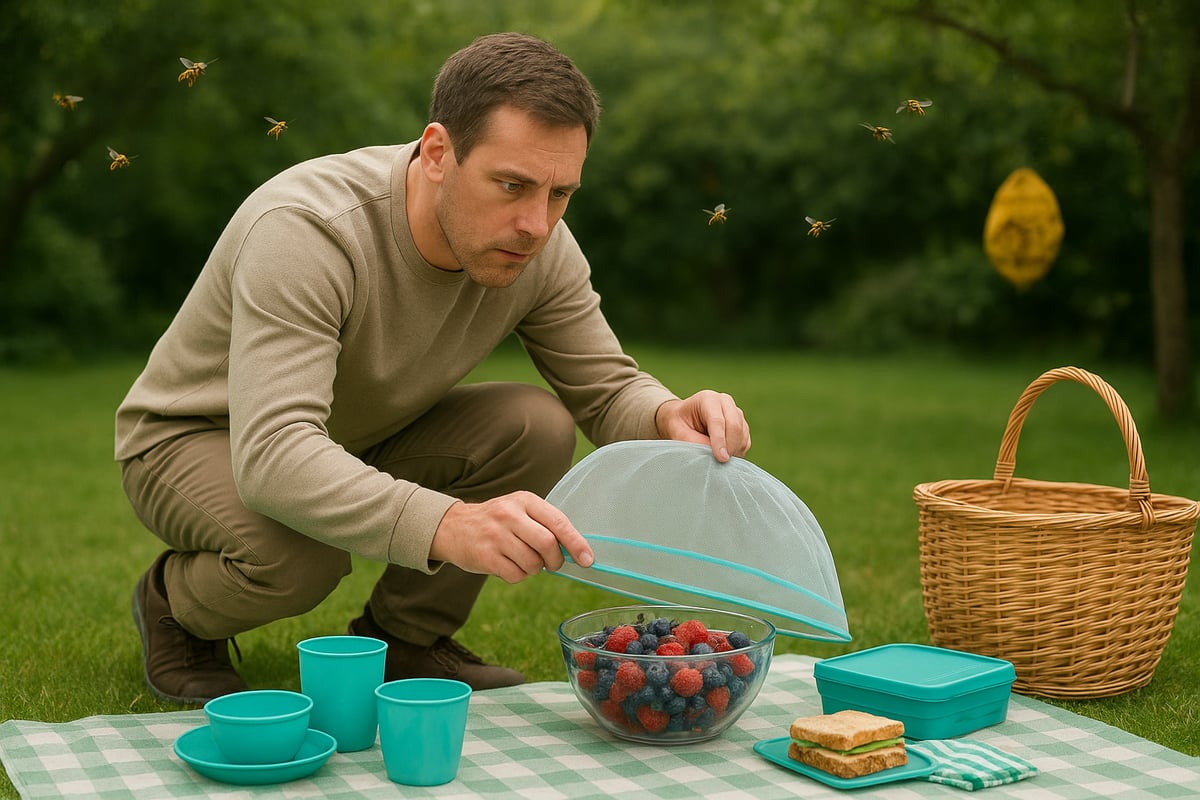
- Keep outdoor food covered until people are ready to eat.
- Use cups with lids when drinking sweet beverages outside.
- Clean sticky spills quickly.
- Keep trash cans sealed and rinse bins when residue builds up.
- Pick up fallen fruit from trees and gardens.
- Avoid walking barefoot in grassy areas during peak yellow jacket season.
- Watch for repeated flight in and out of one hole, crack, or shrub.
The EPA recommends reducing access to food, cleaning up sweet drinks, keeping trash covered, repairing moisture issues, and sealing entry points as part of integrated pest management for bees and wasps around schools and public spaces. Those same habits help around Colorado homes, too.
What To Do If You Find A Nest
If you notice yellow jacket bees entering and exiting the same spot, do not block the hole, pour anything into it, or start poking around. That can trigger defensive behavior quickly.
- Back away calmly.
- Keep children and pets away from the area.
- Mark the general location from a safe distance.
- Avoid mowing, digging, trimming, or spraying directly near the entrance.
- Call for help if the nest is near a walkway, patio, door, play area, or pet area.
Yellow jacket bees can sting more than once. If the colony feels threatened, multiple workers may respond. That is why nest location matters so much. A nest at the back of a large unused area is very different from one next to a front step.
First Aid For Yellow Jacket Stings
Most stings cause pain, redness, itching, and swelling. Some reactions are more serious. If someone has trouble breathing, swelling of the face or throat, dizziness, widespread hives, or symptoms that seem severe, seek emergency medical help right away.
For a typical sting, move away from the area first. Yellow jacket bees may continue defending the nest if you stay nearby.
- Wash the sting area with soap and water.
- Use a cold compress to reduce pain and swelling.
- Monitor for signs of an allergic reaction.
- Get medical help immediately for severe symptoms or multiple stings.
This article is not medical advice. Anyone with a known sting allergy should follow their physician’s instructions and keep emergency medication available as directed.
Yellow Jacket Bees And Beekeeping
Yellow jacket bees can be a problem for backyard beekeepers, especially later in the season. They may scavenge dead bees, rob honey, and pressure weak colonies.
How Beekeepers Can Reduce Pressure
- Keep colonies strong and monitor for disease or stress.
- Reduce hive entrances during periods of heavy yellow jacket pressure.
- Avoid leaving exposed honey, syrup, or dead bees near hives.
- Place traps away from hives so they do not draw yellow jackets toward the colony.
- Watch for repeated raids, especially in late summer and early fall.
Healthy hives are usually better able to defend themselves. Weak or stressed colonies are more vulnerable, so prevention and monitoring matter.
Yellow Jackets In Colorado: Local Risk Along The Front Range
Yellow jacket bees in Colorado are common from Wellington down through Denver, Aurora, Lakewood, Brighton, Thornton, Westminster, Parker, Castle Rock, and into Colorado Springs. They are also active in communities like Longmont, Loveland, Fort Collins, Broomfield, Arvada, Littleton, Englewood, Erie, Firestone, and Greeley.
Colorado State University’s yellowjacket information notes that yellowjackets are found through much of Colorado and can thrive around residential developments. That matches what many homeowners notice. The more people, trash areas, lawns, gardens, patios, and irrigated landscapes there are, the more opportunities yellow jacket bees have to find food and nesting spaces.
Common Colorado Yellow Jacket Species
Colorado can have several yellow jacket species, but homeowners commonly deal with ground-nesting yellow jackets and structure-associated yellow jackets. The Western yellowjacket is one of the important species in the region. German yellowjackets may also nest in structural voids and become an issue around buildings.
| Type | Common Nesting Pattern | Common Concern |
|---|---|---|
| Western Yellowjacket | Often ground nesting | Yards, parks, lawns, and landscaping |
| German Yellowjacket | Can nest in structures | Wall voids, attics, siding gaps, and buildings |
| Baldfaced Hornet | Aerial paper nests | Trees, shrubs, eaves, and high-traffic outdoor areas |
When Yellow Jacket Bees Need Professional Control
Some yellow jacket activity can be managed with sanitation, awareness, and avoidance. But a nest near people is different. If yellow jacket bees are nesting near a front door, backyard patio, children’s play area, dog run, business entrance, outdoor dining area, or inside a wall void, professional help is usually the safer choice.
OBEX Pest Defense helps Colorado homeowners and businesses reduce wasp and hornet pressure with targeted, label-directed service. The goal is realistic: reduce activity, address nest pressure when accessible, and help prevent repeated issues around the structure. We do not promise instant or permanent elimination because yellow jacket bees are seasonal, mobile, and influenced by surrounding properties.
If you are seeing repeated yellow jacket bees activity around the same location, it is worth taking seriously. A few wasps around food may just be foraging. A steady line of wasps moving in and out of one place usually points to a nest.
Start protecting your property
Helpful Yellow Jacket Resources
For more detail, these resources are useful:
- Colorado State University: Yellowjackets In Colorado
- UC IPM: Yellowjackets And Other Social Wasps
- EPA: Bees And Wasps IPM Guidance
- Texas A&M School IPM: Yellowjacket Action Plan
- National Weather Service: Denver 2025 Annual Weather Summary
Frequently Asked Questions About Yellow Jacket Bees
Are yellow jacket bees actually bees?
No. Yellow jacket bees are wasps, not bees. People search for “yellow jacket bees” because the phrase is common, but yellow jackets are social wasps with different nesting habits, body shape, and defensive behavior than honey bees.
Why are yellow jacket bees so aggressive in late summer?
Late summer is when colonies are larger and food sources begin changing. Yellow jacket bees are more likely to investigate meat, sweets, trash, soda, fruit, and outdoor meals. They are also highly defensive near the nest.
Where do yellow jacket bees nest in Colorado?
Yellow jacket bees commonly nest in ground holes, old rodent burrows, wall voids, eaves, shrubs, trees, and protected landscaping areas. Ground nests are especially easy to miss until someone gets too close.
Do yellow jacket bees reuse old nests?
Usually, no. Yellow jacket nests are seasonal. New queens survive winter and start new nests in spring. Old nests are typically abandoned after the colony dies off.
Can yellow jacket bees sting more than once?
Yes. Yellow jacket bees can sting multiple times. That is one major difference between yellow jackets and honey bees.
What should I do if I find a yellow jacket nest?
Back away calmly, keep people and pets away, and avoid disturbing the area. Do not pour gasoline, water, or household chemicals into the nest. If the nest is near a high-traffic area, professional service is the safer option.
Does OBEX treat yellow jacket bees?
Yes. OBEX treats wasps and hornets, including yellow jacket activity, when the issue is within our service scope. Service is designed to reduce pest pressure over time and address activity safely based on the nest location and conditions.
Related Posts


